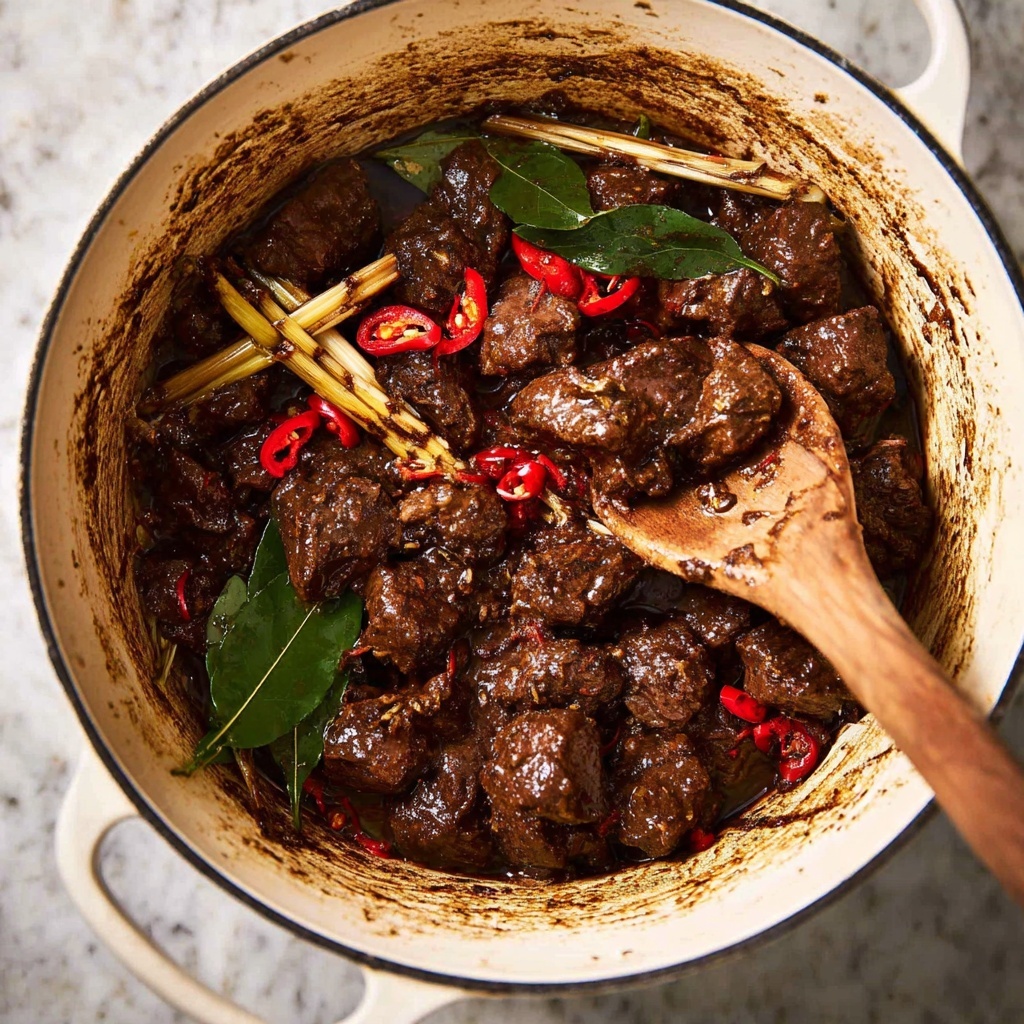
If you are looking for a dish that bursts with rich, warm flavors and creates a beautiful harmony of spices, then this Beef Rendang Recipe is your next kitchen adventure. This traditional Indonesian delight is a slow-cooked masterpiece, where tender beef cubes are infused with a vibrant blend of lemongrass, galangal, chilies, and coconut milk, resulting in a deeply fragrant, melt-in-your-mouth experience that will absolutely wow your taste buds and everyone at your table.
Ingredients You’ll Need
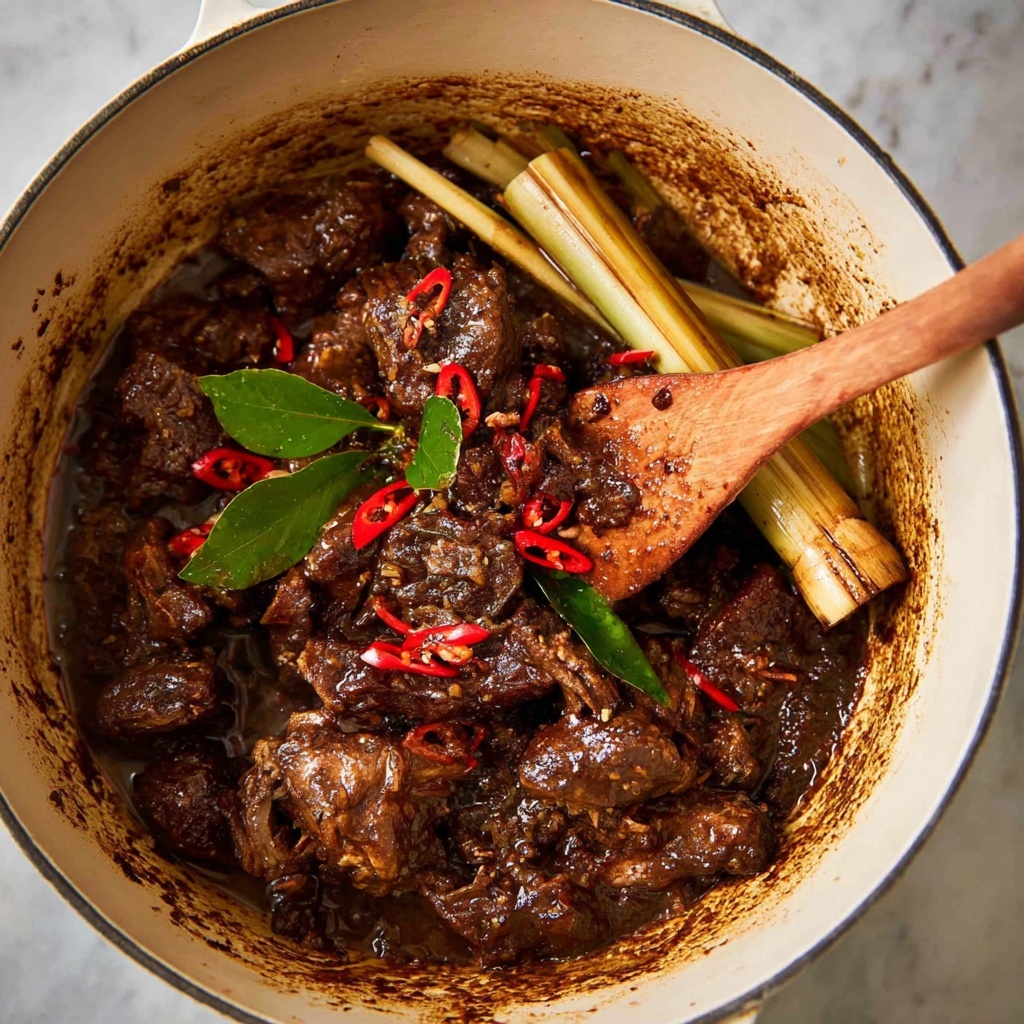
The magic of this Beef Rendang Recipe lies in its straightforward yet thoughtfully chosen ingredients, each bringing its own unique flavor note or texture. From the aromatic lemongrass to the creamy coconut milk, every component is essential to creating that iconic balance of spicy, tangy, and mellow flavors.
- 12 dried chilies or 12 large fresh chilies: Rehydrated or fresh, these add the perfect spicy kick and fiery color.
- 1 small onion, finely chopped: Builds a subtle sweetness and depth in the spice paste.
- 5 cloves garlic, minced: Infuses a robust, aromatic base essential for authentic taste.
- 3 lemongrass stalks, white part only, sliced: Adds a fresh citrusy brightness that lifts the dish.
- 1 1/2 tbsp fresh galangal, finely chopped: Offers an earthy, slightly pine-like flavor that’s indispensable in rendang.
- 1 1/2 tbsp fresh ginger, minced: Brings warmth and a gentle bite to the spice profile.
- 2 tbsp oil (vegetable, canola or peanut): For sautéing the spice paste to release flavors.
- 2 lb (1 kg) chuck steak or other slow-cooking beef: Cubed for tender, melt-in-your-mouth meat.
- 1 tbsp oil: Additional oil to brown the beef beautifully.
- 1 cinnamon stick: Adds a subtle sweetness and aromatic complexity.
- 1/4 tsp clove powder: Delivers a warm, slightly sweet spiced note.
- 3 star anise: Brings a hint of licorice-like aroma to the dish.
- 1/2 tsp cardamom powder: For a fragrant, floral touch that rounds out the spices.
- 1 lemongrass stick, smashed (bottom half only): Adds an extra layer of citrus fragrance while simmering.
- 400 ml (14 oz) coconut milk: The creamy base that tenderizes the meat and balances the heat.
- 2 tsp tamarind puree or paste: Brings tanginess that brightens the deep flavors.
- 4 large kaffir lime leaves, finely sliced: Imparts a zesty, fresh aroma that invigorates the dish.
- 1/3 cup desiccated coconut: Adds texture and a toasty richness when browned.
- 1 tbsp brown sugar or grated palm sugar: Slight sweetness to balance the spices.
- 1 1/2 tsp salt: Enhances all the underlying flavors for a perfectly seasoned finish.
How to Make Beef Rendang Recipe
Step 1: Prepare the Spice Paste
Start by placing the dried or fresh chilies, onion, garlic, lemongrass, galangal, and ginger into a small food processor. Whizz until you get a fine, aromatic paste. If your processor isn’t strong, chop the dried chilies first to help. This paste is the heart of your dish—packed with fragrance and heat ready to release.
Step 2: Brown the Beef
Heat 1 tablespoon of oil in a heavy pot over high heat. Add half the beef cubes and brown them until they develop a nice crust; then transfer to a plate. Repeat with the remaining beef. Browning seals in the juices and adds savory complexity that will elevate your rendang.
Step 3: Cook the Spice Paste
Lower the heat to medium-low and add the prepared spice paste to the pot. Cook for 2 to 3 minutes, stirring often, until the paste darkens and reduces. Be careful not to inhale the fumes too deeply as the chilies might sting your nose. This step brings out intense flavor and aroma, which is crucial for an authentic rendang.
Step 4: Add Remaining Ingredients
Stir in the cinnamon stick, clove powder, star anise, cardamom powder, smashed lemongrass stick, coconut milk, tamarind puree, kaffir lime leaves, desiccated coconut, brown sugar, salt, and all the browned beef. Mix everything thoroughly so all the flavors start marrying beautifully.
Step 5: Simmer Gently
Bring the mixture to a simmer and then immediately reduce the heat to low or medium-low. You want the sauce to bubble gently, not boil aggressively. Cover the pot with its lid and let it gently simmer for 1 hour and 15 minutes, allowing the beef to soak in the spices and coconut milk intensively.
Step 6: Check Beef Tenderness
Remove the lid and test the beef for tenderness. It should be soft but not falling apart just yet. If it already disintegrates by touch, carefully remove the beef first so it doesn’t overcook in the sauce reduction stage.
Step 7: Reduce the Sauce
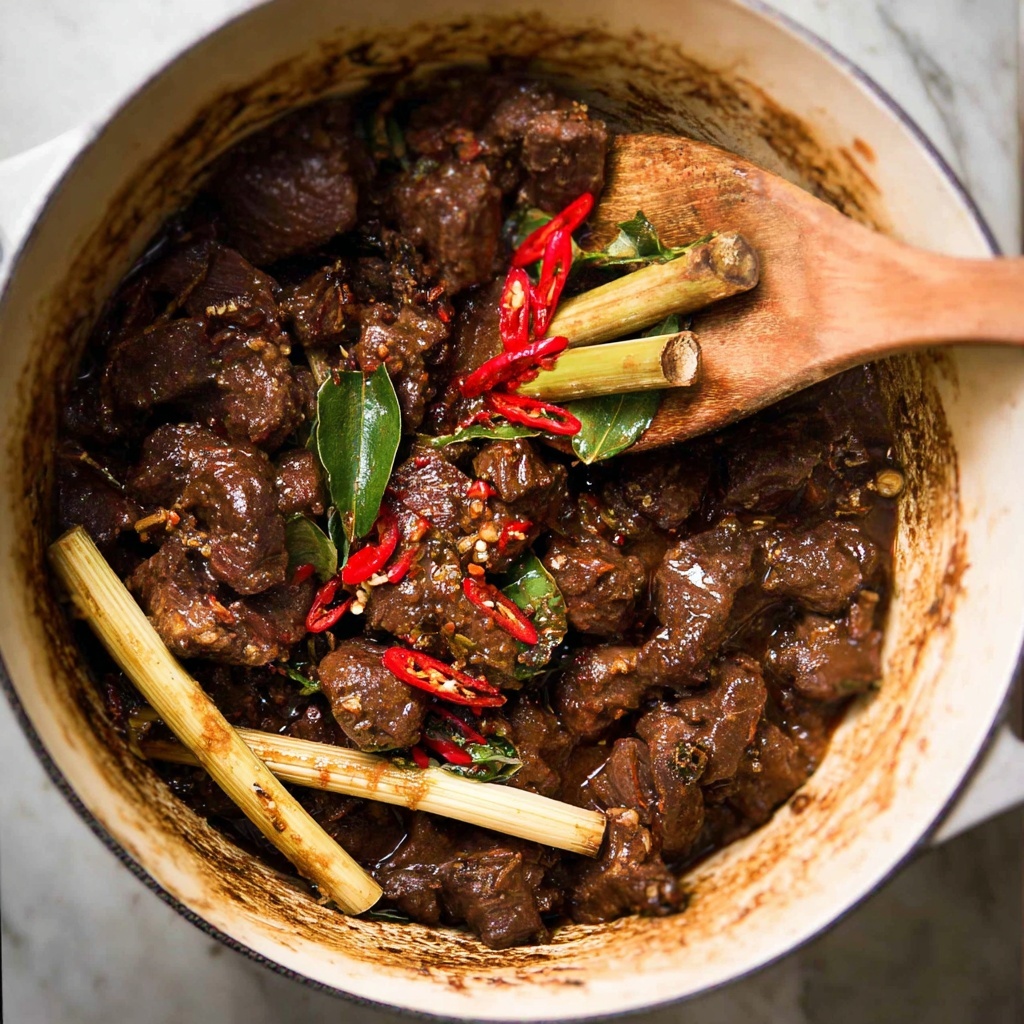
Turn heat up to medium and let the sauce reduce for 30 to 40 minutes. Stir intermittently at first, then more frequently towards the end to prevent sticking. Watch as the sauce thickens into a luscious paste that clings to the beef, intensifying the flavors and deepening the color.
Step 8: Final Tenderness Check
Your beef should now be tender enough to fall apart with the lightest touch. If not quite there, add a splash of water and continue cooking gently until perfection is achieved. Remove from heat and get ready to serve a bowl full of extraordinary taste.
How to Serve Beef Rendang Recipe
Garnishes
To complement the rich, spicy rendang, sprinkle freshly chopped coriander or some thinly sliced kaffir lime leaves on top. A wedge of lime on the side can add a refreshing zing when squeezed, cutting through the richness beautifully.
Side Dishes
Traditionally, Beef Rendang is paired with steamed jasmine rice or coconut rice to soak up the delicious sauce. You could also serve it with a simple cucumber salad or lightly blanched green beans for a fresh contrast alongside the deeply spiced beef.
Creative Ways to Present
For an impressive dinner party, present the Beef Rendang in a rustic clay pot or a deep serving bowl, surrounded by fragrant herbs and sliced chilies for color. You could also use banana leaves as a base to add an authentic Southeast Asian touch that will wow your guests visually and aromatically.
Make Ahead and Storage
Storing Leftovers
Leftover Beef Rendang can be stored in an airtight container in the refrigerator for up to 3 days. The flavors actually deepen over time, so your next-day rendang might taste even better!
Freezing
This recipe freezes beautifully. Place cooled portions in freezer-safe bags or containers and freeze for up to 3 months. Just thaw overnight in the fridge before reheating to preserve texture and flavor.
Reheating
To reheat, warm your rendang gently on the stovetop over low heat, stirring occasionally. Add a splash of water or coconut milk if the sauce has thickened too much. Avoid microwaving directly from frozen as this can dry out the beef unevenly.
FAQs
Can I use other cuts of beef for this recipe?
Absolutely! Chuck steak or any other slow-cooking cut is ideal for its marbling and tenderizing qualities. Brisket or beef shank also work well but avoid leaner cuts as they can become tough during the long cooking.
Is Beef Rendang very spicy?
The heat level can be adjusted easily by controlling the amount and type of chilies used. Traditional rendang has a pleasant warmth rather than overwhelming heat, allowing the complex spices to shine through.
What if I can’t find galangal or kaffir lime leaves?
Fresh galangal gives a unique flavor, but you can substitute with extra ginger if necessary. Kaffir lime leaves add citrus aroma; lemon zest is an acceptable alternative in a pinch, though it won’t be quite the same.
Can I make this dish in a slow cooker?
You can! Brown the beef and prepare the spice paste as instructed, then transfer everything to the slow cooker and cook on low for 6 to 8 hours, or until the beef is tender. Finish by reducing the sauce on the stove to get that perfect rendang texture.
What wine pairs well with Beef Rendang?
A fruity, medium-bodied red like Pinot Noir or a Grenache complements the rich spices without overpowering them. If you prefer white, try a slightly off-dry Riesling to balance the heat and complexity.
Final Thoughts
I truly hope you enjoy making and savoring this incredible Beef Rendang Recipe as much as I do! Its layers of flavor and tender beef make it a dish that’s not only comforting but also impressively exotic. Once you try it, you’ll find it’s a recipe worth returning to, anytime you want a meal that feels special and bursting with authentic personality.