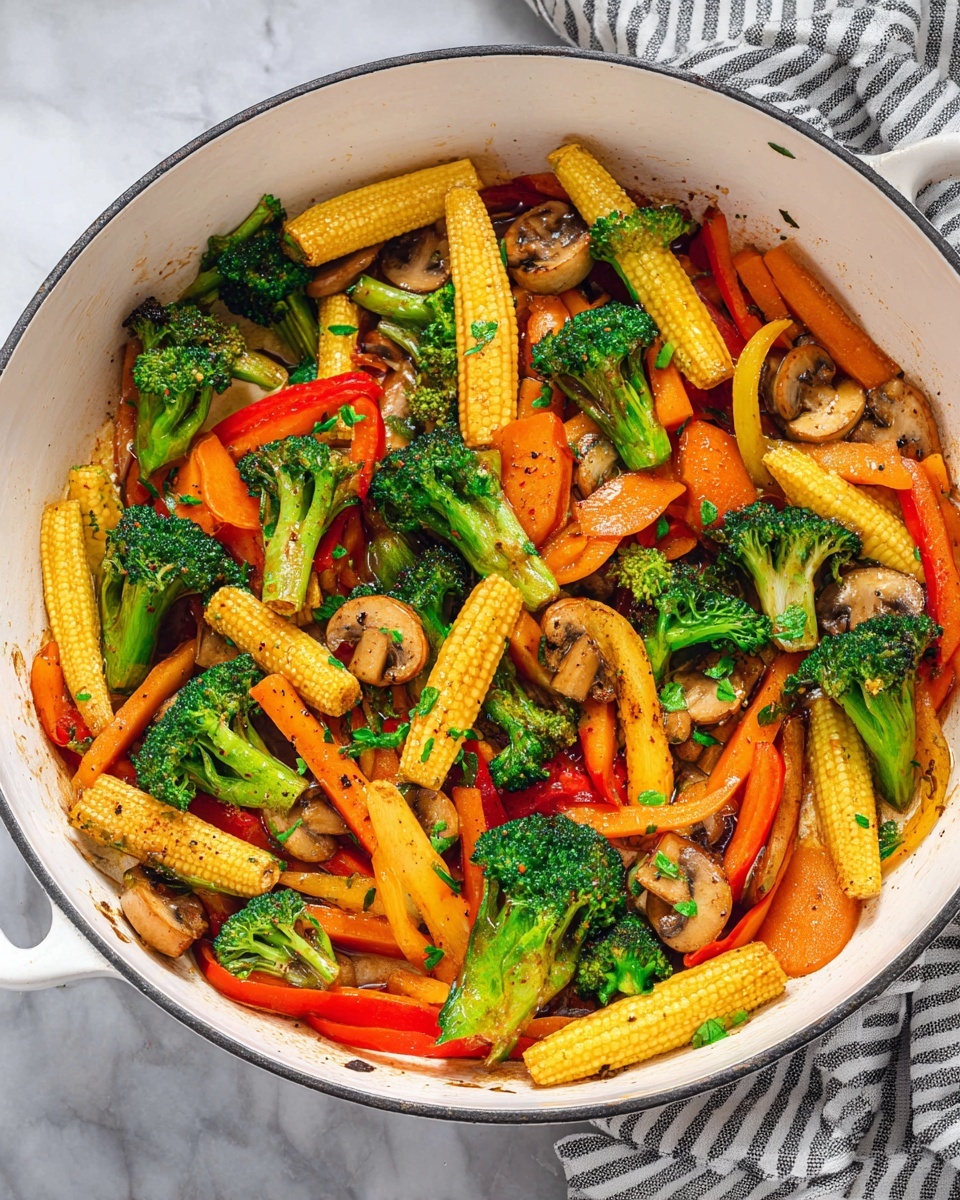
If you’re looking for a vibrant, quick, and wholesome meal to brighten up your dinner table, this Vegetable Stir Fry Recipe is your new best friend. Bursting with colorful veggies and tossed in a perfectly balanced savory sauce, it’s a dazzling dish that’s both comforting and invigorating. Whether you’re a seasoned home cook or just starting out, this recipe delivers an easy way to enjoy fresh textures, lively flavors, and the satisfying sizzle of stir-fried goodness in every bite.
Ingredients You’ll Need
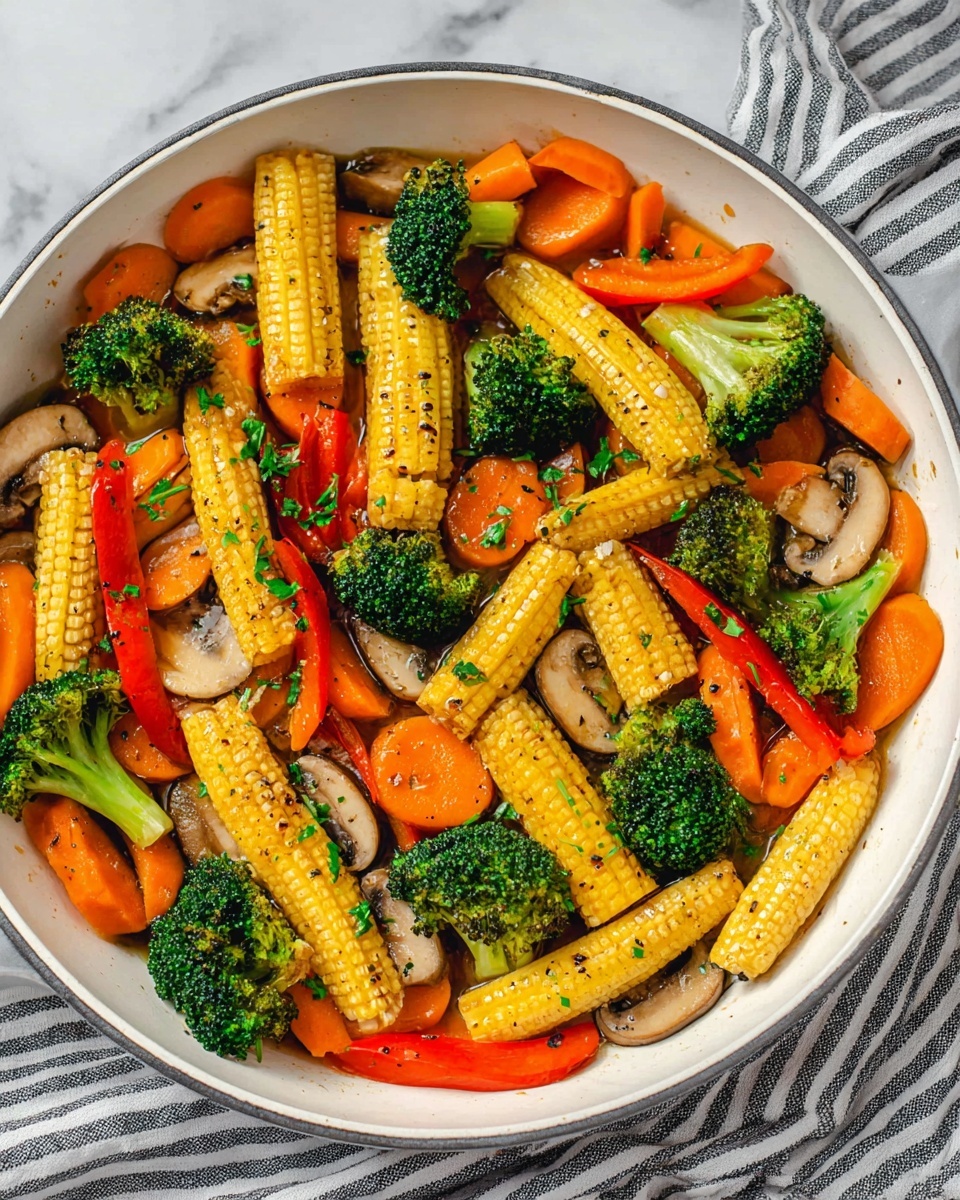
These ingredients come together simply yet wonderfully to bring that perfect harmony of taste, texture, and color in your vegetable stir fry. Each component plays a key role, from the crunch of fresh veggies to the rich and slightly sweet sauce that coats them beautifully.
- Chicken or vegetable broth (1/4 cup): Adds depth and moisture, making your sauce rich without heaviness.
- Low-sodium soy sauce (3 Tbsp): Brings a savory umami punch; swap for Tamari if you prefer gluten-free.
- Corn starch (1 tsp): Helps thicken the sauce so it clings perfectly to every vegetable.
- Honey (2 Tbsp): Provides a subtle sweetness that balances the salty soy and tangy elements.
- Hot sauce (¼ tsp, optional): Adds a gentle kick to awaken your taste buds—Frank’s or Sriracha work wonders.
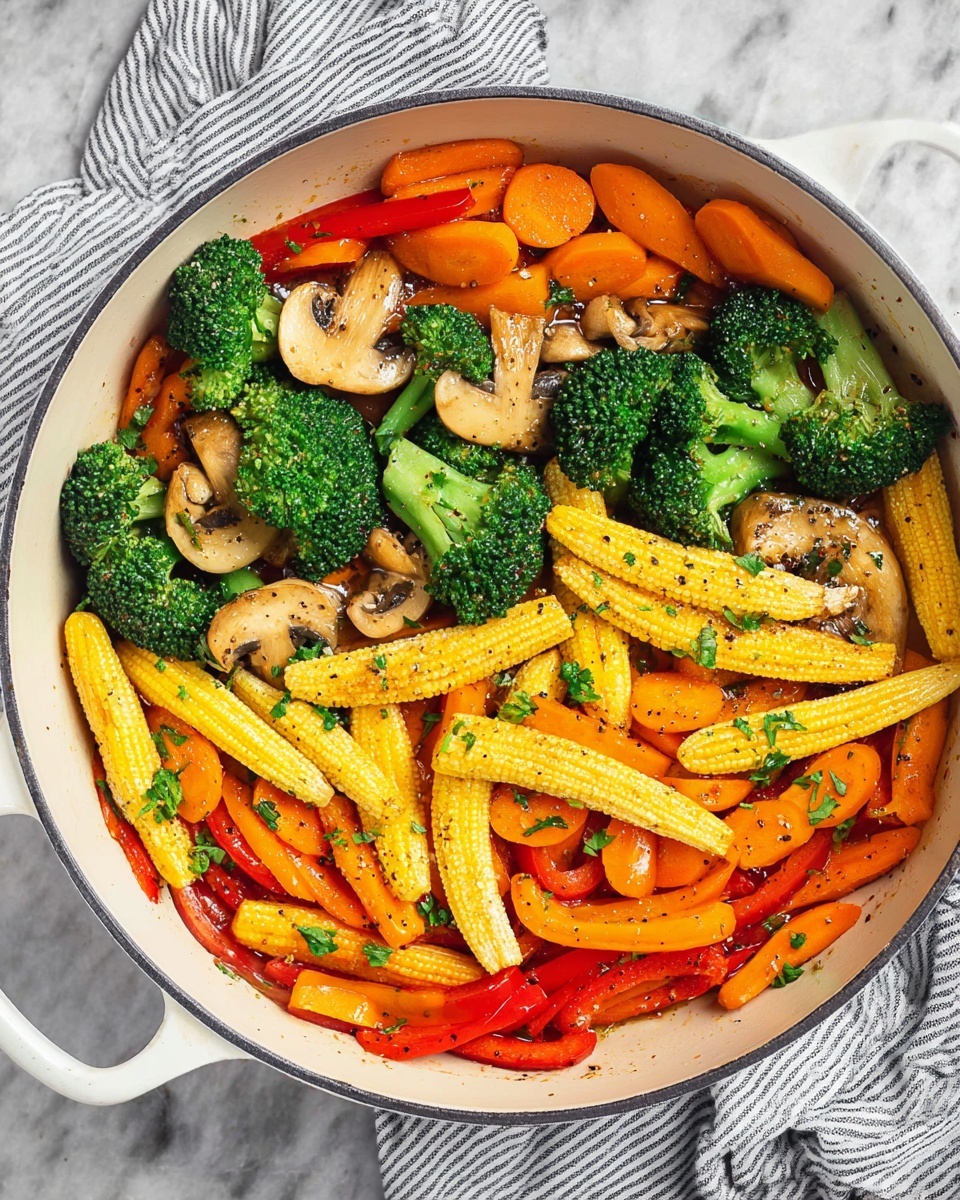
- Carrot (1 large, sliced): Offers a sweet crunch and bright color.
- Broccoli florets (2 cups): A classic stir fry veggie for vibrant green and satisfying bite.
- Baby corn spears (8 oz, drained): Adds delicate sweetness and interesting texture.
- Mushrooms (8 oz, white or brown, sliced or quartered): Bring savory earthiness and meaty texture.
- Bell pepper (1 whole, red, yellow, or orange, seeded and sliced): Provides crispness and a pop of color.
- Cooking oil (2 Tbsp): Use extra light olive or canola for a clean and hot stir fry.
- Unsalted butter (2 Tbsp): Adds richness and helps meld aromatics into the dish.
- Garlic cloves (3, peeled and minced): Power-packed flavor that makes the dish irresistible.
- Ginger (2 tsp, minced): Lends fresh warmth and slight zestiness to elevate the stir fry.
How to Make Vegetable Stir Fry Recipe
Step 1: Prepare the Stir Fry Sauce
Start by mixing your stir fry sauce in a small bowl—combine chicken or vegetable broth, soy sauce, corn starch, honey, and that optional hit of hot sauce. Stir well until the corn starch is fully dissolved. Set it aside for a moment; this sauce will be the magic that ties all your ingredients together in a glossy, flavorful glaze.
Step 2: Sauté the Vegetables
Heat a large non-stick skillet or wok over medium-high heat and add your cooking oil. Once it’s shimmering and ready, toss in your sliced carrots, broccoli florets, baby corn, mushrooms, and colorful bell peppers. Stir-fry these vibrant veggies for about 3 minutes, just until they are crisp-tender. The key is to keep them bright and fresh with a slight bite rather than overcooking them soft.
Step 3: Add Aromatics
Turn the heat down to medium and add the butter, garlic, and ginger right into the pan. Stir them constantly for 30 to 60 seconds, and you’ll notice the kitchen filling with that irresistible, fragrant aroma. This step infuses your dish with layers of buttery, garlicky, and spicy notes that make it so much more than just a veggie stir fry.
Step 4: Incorporate the Stir Fry Sauce
If your sauce has settled or separated, give it a quick stir before pouring it over your vegetables. Lower the heat to medium-low and cook everything for another 3 to 4 minutes, stirring gently. This allows the sauce to thicken slightly and coat each piece of vegetable beautifully. Adjust your timing here if you prefer veggies a little softer or crispier — it’s your call!
How to Serve Vegetable Stir Fry Recipe
Garnishes
Sprinkle fresh chopped green onions or toasted sesame seeds on top just before serving to add an extra burst of texture and visual appeal. A few cilantro leaves or a splash of lime juice can also brighten things up nicely.
Side Dishes
This Vegetable Stir Fry Recipe shines best paired with simple sides like steamed jasmine rice or fluffy quinoa, which soak up all that lovely sauce. For a gluten-free or low-carb option, cauliflower rice is an equally delicious and nutritious choice.
Creative Ways to Present
For a fun twist, serve your stir fry atop a bed of noodles or even wrapped in fresh lettuce leaves for a lighter, hands-on experience. You can also transform it into a hearty bowl by adding protein like grilled tofu, shrimp, or thinly sliced chicken for extra sustenance.
Make Ahead and Storage
Storing Leftovers
Place any leftover vegetable stir fry in an airtight container and refrigerate it promptly. It will stay fresh and tasty for up to 3 days, making for a quick, healthy meal when time is tight.
Freezing
While freezing vegetable stir fry isn’t ideal because some veggies can become watery after thawing, you can freeze the stir fry sauce separately in freezer-safe containers or bags to keep on hand for a speedy stir fry anytime.
Reheating
To reheat, gently warm the leftovers in a skillet over medium heat, stirring occasionally to prevent sticking and to refresh the flavors. Avoid microwaving if you want to keep the vegetables from becoming mushy — the stove method preserves texture beautifully.
FAQs
Can I use frozen vegetables for this Vegetable Stir Fry Recipe?
Absolutely! Frozen vegetables can be a convenient substitute and still provide great flavor. Just be mindful not to overcook them since they release more water while cooking, and adjust your cook time accordingly.
How do I make this stir fry gluten-free?
Simply swap the soy sauce for a gluten-free alternative like Tamari. Also, double-check that any broth and other ingredients are gluten-free to keep the dish safe for those with sensitivities.
Can I add protein to this recipe?
Definitely! This Vegetable Stir Fry Recipe is very versatile. Consider adding cooked tofu, chicken, beef, or shrimp either before adding the vegetables or mixed in at the end for a balanced meal.
Is this recipe spicy?
The recipe itself has just a hint of warmth through the optional hot sauce, but you can easily adjust this to your liking. Omit the hot sauce for a mild dish or add extra for a fiery kick.
What can I substitute for unsalted butter?
If you prefer a dairy-free version, coconut oil or a neutral oil works well to add richness and help cook the aromatics without overpowering the flavors.
Final Thoughts
This Vegetable Stir Fry Recipe has quickly become one of those dishes I turn to whenever I need a quick, colorful, and nutritious meal that never fails to satisfy. The combination of fresh vegetables with that silky sauce and punchy aromatics makes every bite a delight. I hope you give it a whirl and find it as comforting and fun to make as I do!