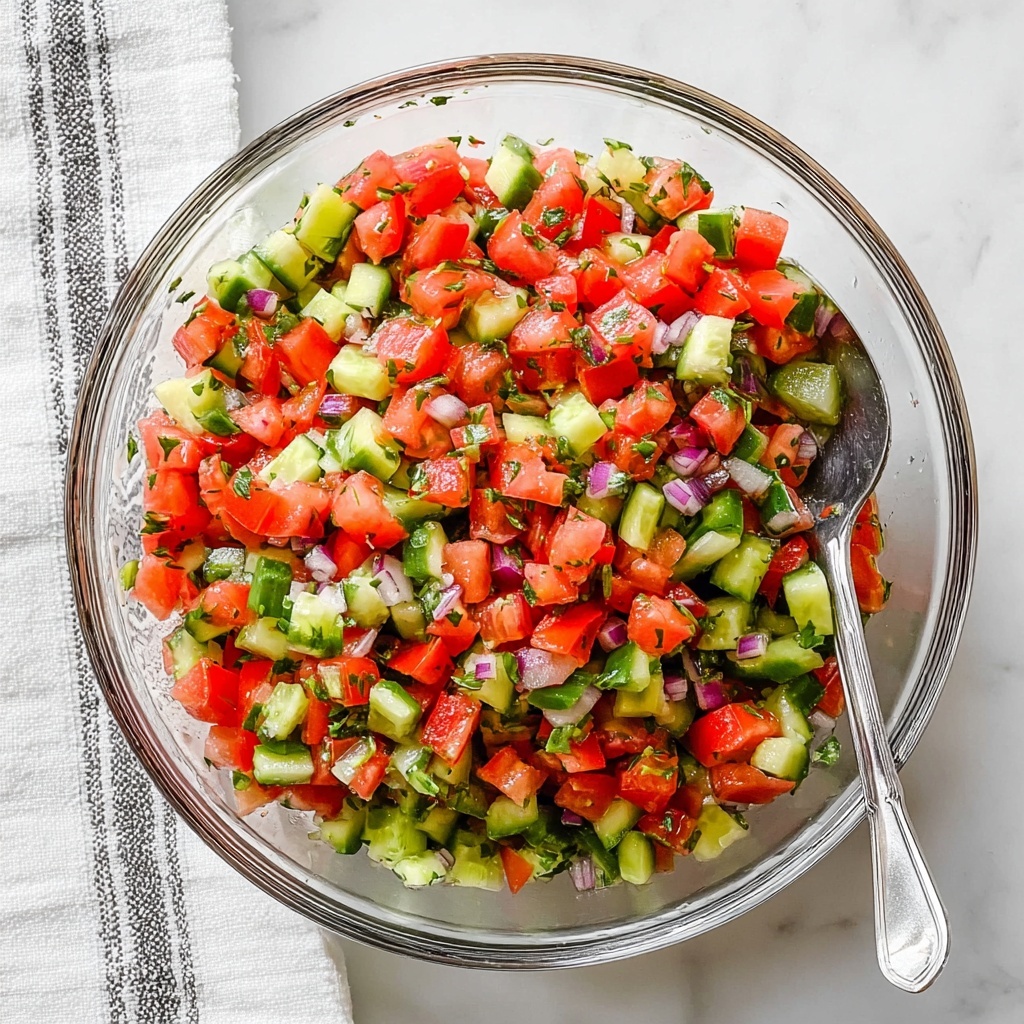
If you’re looking for a refreshing dish that’s bursting with vibrant flavors and makes the perfect accompaniment to any meal, this Arabic Salad Recipe is an absolute must-try. Fresh, crisp vegetables mingle with fragrant herbs and a tangy, citrusy dressing to create a harmonious blend that is both simple and unforgettable. Whether you’re serving it as a light lunch or a colorful side, this salad brings a bright splash of Middle Eastern charm to your table.
Ingredients You’ll Need
The beauty of this Arabic Salad Recipe lies in its simplicity — each ingredient plays a vital role, contributing texture, color, and a mix of fresh, zesty, and aromatic notes. Gathering these basic kitchen staples will set you up for a dish that’s as visually appealing as it is delicious.
- 4 Roma tomatoes, diced: Juicy and slightly sweet, tomatoes are the vibrant base that adds a refreshing burst to every bite.
- 4 small cucumbers, diced: Cool and crunchy, cucumbers bring a delightful crispness that complements the tomatoes perfectly.
- 1/2 medium red onion, finely diced: Adds a gentle sharpness that cuts through the salad’s overall freshness enhancing the savory dimension.
- 1/4 cup chopped parsley: Bright and herbaceous, parsley lends a lovely green hue and freshness that ties the flavors together.
- 1/4 cup chopped mint: Aromatic and cooling, mint elevates the salad by adding a subtle herbal lift.
- 3 tablespoons olive oil: Rich and smooth, olive oil binds the ingredients while adding a silky texture.
- 1 tablespoon freshly squeezed lemon juice: Sharp and zesty, lemon juice provides that perfect tang which enlivens the entire salad.
- 1 teaspoon sumac: A tangy Middle Eastern spice, sumac offers a unique lemony flavor and a beautiful red hue to the dressing.
- 1 teaspoon sea salt: Enhances all the flavors, making sure none of the freshness gets lost.
- 1/2 teaspoon ground black pepper: Adds just a hint of heat and complexity for balance.
How to Make Arabic Salad Recipe
Step 1: Combine the Fresh Vegetables
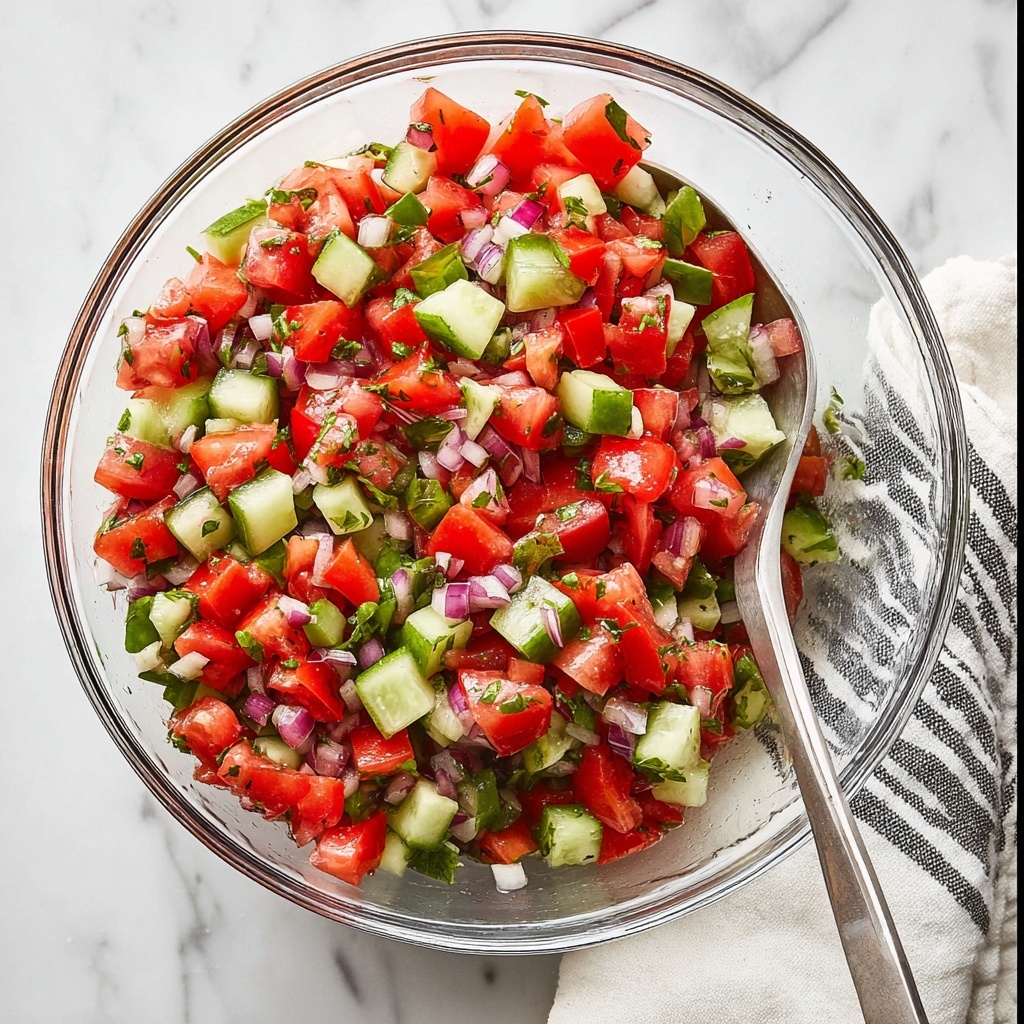
Start by tossing the diced Roma tomatoes, cucumbers, and finely diced red onion together in a large bowl. This foundation brings together a mix of textures — the tomatoes are juicy, the cucumbers crisp, and the onion offers a mild bite, creating an inviting base for your Arabic Salad Recipe.
Step 2: Add the Fresh Herbs
Next, sprinkle in the chopped parsley and mint, then gently stir to distribute the herbs evenly throughout the vegetables. These herbs not only elevate the salad’s taste but also add a beautiful splash of fresh green that makes the dish feel vibrant and alive.
Step 3: Whisk Together the Dressing
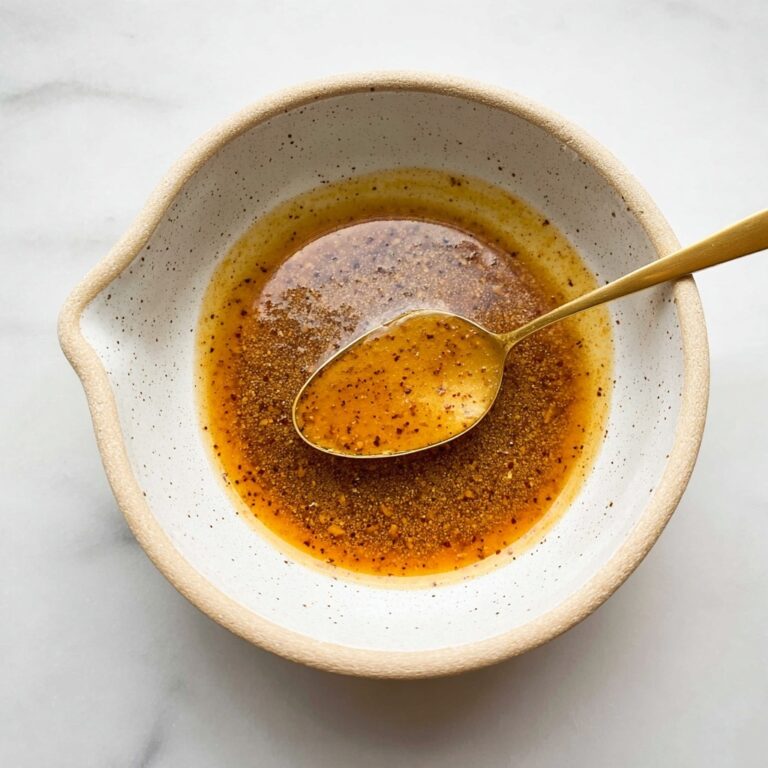
In a small bowl, combine the olive oil, freshly squeezed lemon juice, sumac, sea salt, and black pepper. Whisk these ingredients until well emulsified. This dressing is the secret weapon in your Arabic Salad Recipe as it complements the fresh veggies with its tangy, lightly spiced, and savory notes.
Step 4: Dress the Salad
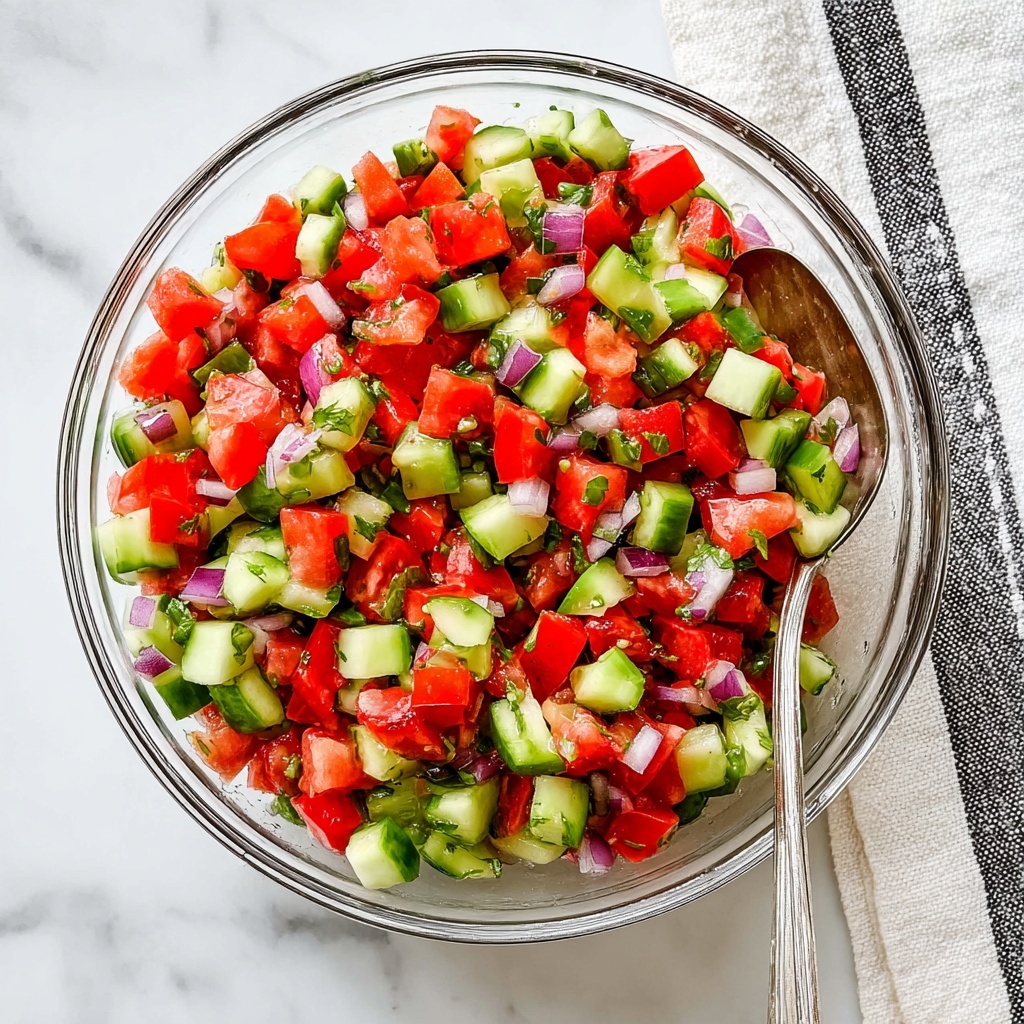
Pour the dressing over your salad bowl and toss everything together carefully but thoroughly. Make sure each vegetable and herb is lightly coated with the zesty dressing, allowing the bold yet balanced flavors to mingle deliciously.
Step 5: Let the Flavors Marry
For best results, serve the Arabic Salad immediately for crunchy freshness or let it rest for about 30 minutes at room temperature to allow the flavors to meld beautifully. Either way, you’re in for a taste explosion that captures the essence of this classic salad.
How to Serve Arabic Salad Recipe
Garnishes
A simple scatter of extra chopped parsley or mint over the top right before serving adds a fresh aroma and makes your presentation pop. A light dusting of sumac over the salad can enhance its signature tangy flavor while providing a lovely visual cue to the spices within.
Side Dishes
Arabic Salad pairs wonderfully with grilled meats like lamb or chicken, making it an ideal side for a barbecue or dinner party. It also shines alongside warm pita bread and hummus for a light, Mediterranean-inspired meal that feels both hearty and invigorating.
Creative Ways to Present
To impress your guests, try serving this salad in individual glass jars or over a bed of baby greens. You can even layer it in a glass bowl to showcase its colorful ingredients. For a picnic or potluck, packing it in airtight containers keeps the freshness intact, and the vibrant colors will be sure to catch everyone’s eye.
Make Ahead and Storage
Storing Leftovers
If you have any leftovers, store the Arabic Salad in an airtight container in the refrigerator. Keep in mind that the fresh vegetables may release some water over time, so it’s best enjoyed within two days to retain that crisp texture and vibrant flavor.
Freezing
This salad is best served fresh and does not freeze well due to the high water content in cucumbers and tomatoes, which can become mushy upon thawing. For best taste, prepare only the amount you plan to eat or enjoy the leftovers cold within a couple of days.
Reheating
Reheating is not recommended for this salad because it relies on the fresh crunch of raw vegetables and lively dressing. If you want to serve it again, simply give it a gentle stir to redistribute the dressing and enjoy it chilled or at room temperature.
FAQs
Can I substitute any of the herbs in the Arabic Salad Recipe?
Absolutely! While parsley and mint provide the traditional flavor profile, you can experiment with cilantro or basil for a different twist. Just be mindful that each herb alters the character of the salad, so start with small amounts to see what you prefer.
Is this Arabic Salad Recipe gluten-free and vegan?
Yes, this salad is naturally gluten-free and vegan. It contains only fresh vegetables, herbs, and simple seasonings without any animal products or gluten-containing ingredients.
Can I add other vegetables to the salad?
Definitely! Some people enjoy adding finely diced bell peppers or radishes for extra crunch and color. Just be sure to keep the additions fresh and crisp to maintain the salad’s signature refreshing quality.
How long can I let the salad rest before serving?
Allowing the salad to rest for about 30 minutes before serving helps the flavors blend beautifully. However, don’t leave it too long as the vegetables may become watery. Around half an hour at room temperature is just right.
What is sumac, and can I use something else?
Sumac is a tangy, lemony Middle Eastern spice often used in Arabic salads. If you don’t have sumac, you can substitute it with a small amount of lemon zest or a pinch of citric acid powder to mimic its bright acidity.
Final Thoughts
Sharing this Arabic Salad Recipe feels like passing along a little piece of sunshine from my kitchen to yours. Its simplicity and freshness make it a delightful addition to any meal, brightening your day with every bite. I can’t wait for you to try it and discover just how much joy a handful of fresh ingredients and a few simple spices can bring to your table.